
At the Edible Atlas, we use genomics to understand the links between
the microbiome, diet, and health

Dive into diet with FoodSeq
Self-reports have historically been viewed as the best method for tracking human diet, but this method has significant drawbacks. They rely on human memory, which can be flawed; often leave out low-income and minority groups; assume a certain level of cognition or education; and place time burden on busy participants.
To overcome these limitations, our group started a side project that uses DNA sequencing to track human diets. We realized the same genomic techniques used in microbiome analyses could be modified to detect food that passes through the gut. In a process we now call FoodSeq, we amplify and sequence plant and animal DNA from human stool to identify individual foods.
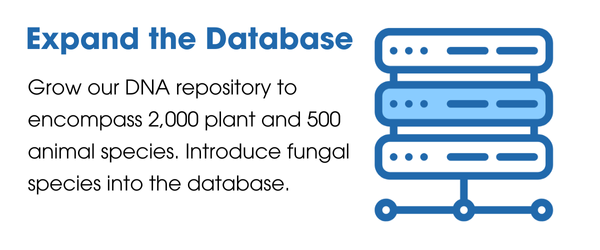
In addition to FoodSeq, we have created a food-specific repository of reference genes. This open-source database includes nearly 900 plant and vertebrate animal species and continues to expand.
Access the FoodSeq Repository
An experimental protocol to amplify trnL from DNA extracted from human fecal samples
A computational pipeline to analyze high-throughput trnL amplicon-sequencing data
A reference database of trnL sequences for food plants used by humans to assign trnL reads to a plant taxon
The FoodSeq Handbook, powered by GitHub, is designed to support the assessment of plant and animal dietary intake directly from human stool samples using DNA metabarcoding with trnL-P6 (UAA) and 12SV5 markers.
The database includes:
Understanding Microbial Communities

Edible Atlas has focused on understanding and engineering gut microbial communities through the lens of microbial ecology. One of our key findings is that nitrogen limitation constrains bacterial growth in the gut, driven by both competition with the host and among bacteria themselves.
We’ve shown how antibiotics disrupt this competition and alter redox dynamics, leading to an ecological succession within the gut. Our team has also conducted proof-of-concept studies on how prebiotic fibers—those that microbes feed on—can be used to modulate the microbiome. Through human trials and advanced models, we’ve been able to test hypotheses on how personalized prebiotic therapies could be developed. Our in vitro and computational approaches allow us to profile bacterial species and identify patterns in microbial metabolism.
These efforts are helping us understand how habitual fiber intake influences individual responses to prebiotics, with implications for dietary interventions aimed at improving health.
In 2025, we collaborated with Duke University’s Forever Learning Institute to create an online course that offers a behind-the-scenes peek of our lab and how we use human fecal samples to uncover what people are eating. This educational video also paved the way for our citizen science project, Everyone EATS.
Next Steps


SUPPORT OUR RESEARCH
If you’re interested in our research and would like to help support us, please click the link below.